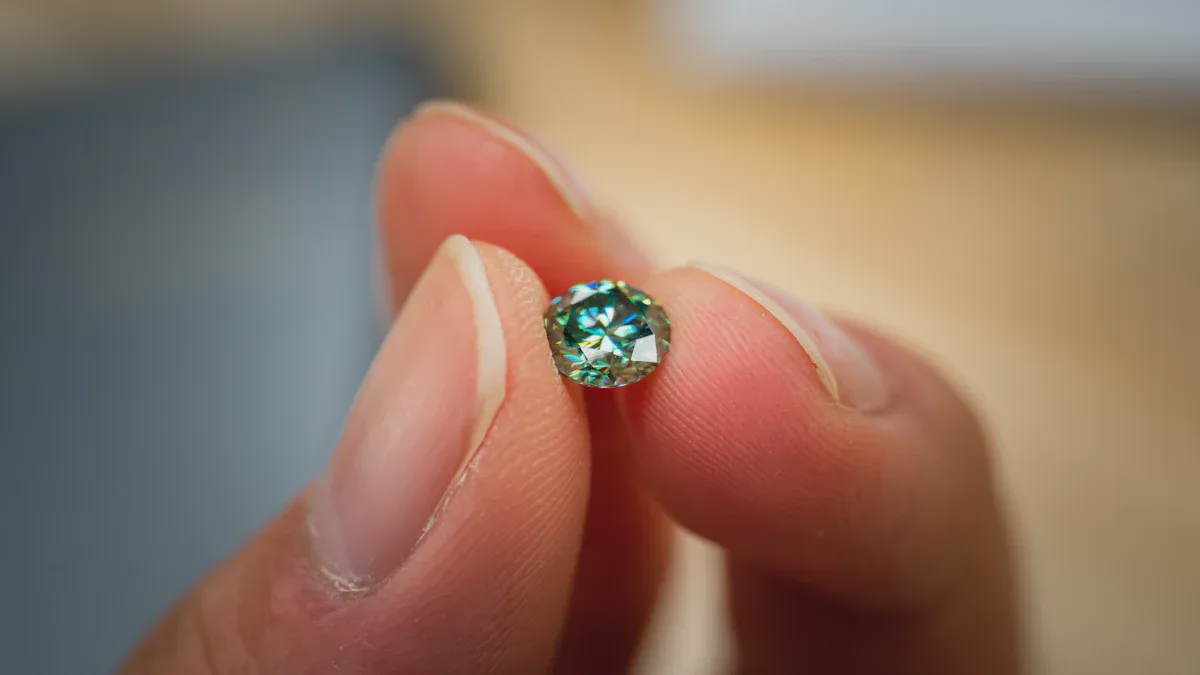
You may wonder how is moissanite created in labs today. Scientists combine silicon and carbon, applying high heat and pressure to form silicon carbide crystals. Nearly all moissanite gems you see are lab-created since natural moissanite is extremely rare. Labs use specialized techniques to produce these gems. Here are the main methods:
Method | Outcome |
|---|---|
Chemical Vapor Deposition | Produces clear, shiny crystals |
Physical Vapor Transport | Creates pure, very clear crystals |
Flux Growth | Grows even, well-formed crystals |
Understanding how is moissanite created in labs shows that lab-made gems offer consistent quality and ethical sourcing. Plus, you can customize your gemstones as well.
Table Of Contents
Key Takeaways
Moissanite is usually made in labs. People mix silicon and carbon together. They use a lot of heat and pressure. This makes clear and strong crystals. Lab-grown moissanite shines more than many other gems. It also lasts longer. Its hardness is 9.25. This means it does not scratch or break easily. Picking moissanite helps the planet and people. It does not need mining. This means less harm to nature and workers. Moissanite is much cheaper than diamonds. You can buy a bigger or better stone. You can also save money for other things. Moissanite sparkles with more colors than diamonds. It can be made in many shapes and sizes. This makes it great for pretty jewelry.
What Is Moissanite
Composition
Moissanite is a gemstone made from silicon carbide. This mineral is very hard to find in nature. Scientists found it in meteorites in 1893. Today, labs make moissanite by mixing silicon and carbon. They use special heat and pressure to do this. The result is a gemstone that shines and looks beautiful.
Diamonds are made of pure carbon, but moissanite is different. Its silicon carbide structure makes it unique. It is not like sapphires, rubies, or emeralds. Moissanite is rare and special because of how it is made.
Gemstone | Chemical Composition | Natural or Lab-Grown |
|---|---|---|
Moissanite | Silicon Carbide | Mostly Lab-Grown |
Diamond | Carbon | Both |
Sapphire | Aluminum Oxide | Both |
Ruby | Aluminum Oxide | Both |
Emerald | Beryl | Both |
Properties
Moissanite stands out because of its great properties. It shines with more brilliance and fire than most gems. This means it reflects light and shows rainbow colors. Moissanite sparkles even more than a diamond.
Moissanite is also very hard. It gets a 9.25 on the Mohs scale. This means it does not scratch easily and stays nice for years. You can wear moissanite jewelry every day. It is tough and does not break easily.
💡 Tip: Moissanite’s high refractive index (2.65–2.69) gives it more sparkle than diamonds, sapphires, or emeralds.
Here is a chart that compares moissanite’s brilliance, fire, and hardness to other popular gemstones:
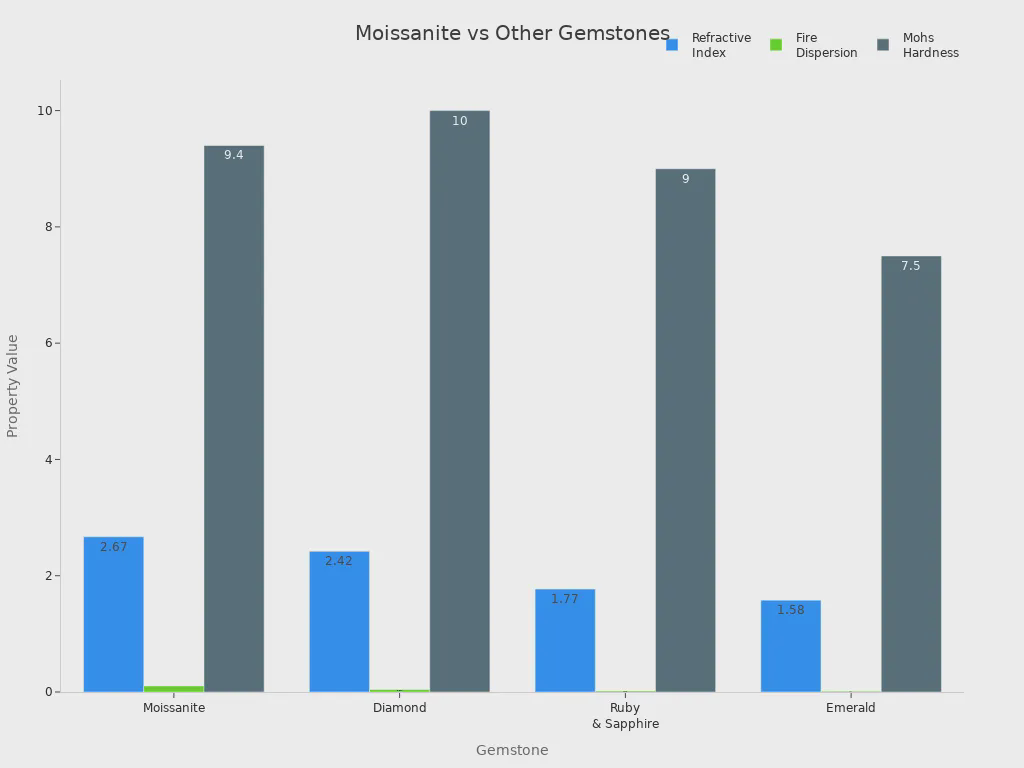
Moissanite’s fire dispersion value is 0.104. This is much higher than a diamond’s 0.044. That makes moissanite one of the most brilliant and strong gemstones you can pick.
How Is Moissanite Created
Raw Materials
You may wonder how is moissanite created from the start. The process begins with two main things: silicon and carbon. Natural moissanite is very rare, so labs use man-made sources. Scientists use pure silicon and gases with carbon or silicon carbide powder. These materials come from clean, high-quality sources. This helps make sure the crystals are clear and strong for gemstones.
Elemental silicon: Taken from cleaned sand or quartz.
Carbon: Comes from gases like methane or from graphite powder.
Silicon carbide powder: Sometimes used right away in some methods.
Labs mix these things under careful rules. This step is key because it helps grow perfect crystals.
Crystal Growth Methods
Now, let’s see how is moissanite created in labs. The change from raw materials to shiny gems uses special crystal growth methods. Scientists use a few ways, and each has its own steps and tools.
Preparation of Silicon Carbide Powder
First, you make silicon carbide powder. There are a few ways to do this:Mix quartz sand with carbon and heat it over 2000°C. This is called the Acheson method.
React silicon powder with carbon powder at 1000-1400°C. This makes very pure silicon carbide.
Use lower heat (1500-1800°C) to make other crystal types.
Crystal Growth Techniques
After making the powder, you start growing the crystals. Here are the most common ways:Chemical Vapor Deposition (CVD):
You put silicon and carbon gases in a vacuum chamber. At high heat, the gases react and make silicon carbide on a hot surface. This builds the crystal one layer at a time.Physical Vapor Transport (PVT) and the Lely Process:
You heat silicon carbide powder in a special chamber, sometimes up to 2500°C. The powder turns into vapor. The vapor moves and lands on a cooler seed crystal, making big, single crystals. The Lely process uses argon gas and can make crystals up to 4 inches wide. This way makes pure, high-quality moissanite.Flux Growth:
You melt silicon carbide in a hot liquid, then cool it slowly. Crystals form as it cools down.
⏳ Note: Growing one moissanite crystal can take 2 to 3 months. The process is slow because you must control heat and pressure very carefully. Waiting gives you perfect, gem-quality crystals.
Cutting and Polishing
After you have the crystal, you need to make it into a gemstone. This is where cutting and polishing happen. Skilled workers plan the best shape to make it shine and waste less. They use special tools to cut the crystal into shapes like round, oval, or cushion.
Cutting:
You slice and shape the crystal carefully. The most popular cut is the round brilliant, which has 58 small flat sides. Each side must be at the right angle to reflect light well.Polishing:
You smooth each side until it shines. Polishing takes away tiny marks and makes the stone sparkle.
How you cut and polish moissanite changes how much it shines. A well-cut stone reflects almost all the light that goes in. Bad cutting can make the stone look dull. That’s why expert cutting and polishing matter a lot in how is moissanite created for jewelry.
💎 Tip: The final gem’s shine and fire depend on the cutter’s skill. Always pick stones with great cut and polish for the best sparkle.
Quality and Grading
Inspection
When you look at a moissanite gemstone, you want to see if it is good quality. Labs and jewelers use special tools to check each stone. They use magnifying glasses, microscopes, and bright lights. These tools help them see tiny things you cannot see with your eyes. Inspectors look for scratches, chips, or marks inside the stone. They also check the shape and how well the stone shines. If a stone has no flaws you can see and shines a lot, it passes the first test. Most lab-grown moissanite stones have very few inclusions because labs control the process. This means you often get a cleaner and clearer stone than many natural gems.
🧐 Tip: Always ask to see your moissanite with a magnifier. You can check the quality by yourself.
Grading Criteria
You may wonder how experts grade moissanite. They use a system called the 4Cs: Color, Clarity, Cut, and Carat weight. This system is almost the same as the one for diamonds, but it has some changes for moissanite’s special features.
Color: Graders use the GIA scale from D (colorless) to Z (tinted). The best moissanite stones for rings are D-F, which look bright and clear.
Clarity: Stones are graded from Flawless (FL) to Included (I3). Moissanite usually has higher clarity than diamonds because labs can control the process and avoid most flaws.
Cut: The cut grade goes from Excellent to Poor. A great cut means the stone sparkles more. Experts look at the shape, symmetry, and polish.
Carat Weight: Moissanite weighs less than diamond, so graders use millimeters to measure size. They also use something called Diamond Equivalent Weight (DEW) to compare moissanite to diamond sizes.
4C | What It Means for Moissanite |
|---|---|
Color | D-F is best, like diamonds |
Clarity | Usually FL to VS1, very clear |
Cut | Excellent or Very Good sparkle |
Carat | Measured by size, not just weight |
Moissanite grading is a lot like diamond grading. You get a stone that often looks clearer and gives you more color choices. Moissanite also costs less than many other gems.
Benefits
Ethical and Environmental
Choosing moissanite is good for people and the Earth. Lab-grown moissanite does not need mining. This helps keep nature safe and workers treated fairly.
Moissanite is made in labs, so it does not hurt the land.
You do not support bad working conditions or unfair jobs.
Making moissanite uses less water and energy than mining.
No animals lose their homes, and no soil or water gets dirty.
You help fair jobs and do not support wars.
Labs do not cut down forests or pollute water when making moissanite. This keeps animals safe and water clean. Moissanite is a smart pick for people who care about others and the world.
Affordability
Moissanite looks fancy but costs much less. You can get a bigger, shiny stone and still save money. Moissanite is much cheaper than diamonds.
Carat Size | Moissanite Average Price Range (USD) | Natural Diamond Approximate Price Range (USD) |
|---|---|---|
1 Carat | $300 - $600 | $4,000 - $10,000 |
2 Carats | $600 - $1,200 | $6,980 - $11,080 |
3 Carats | $1,000 - $2,000 | $25,980 |
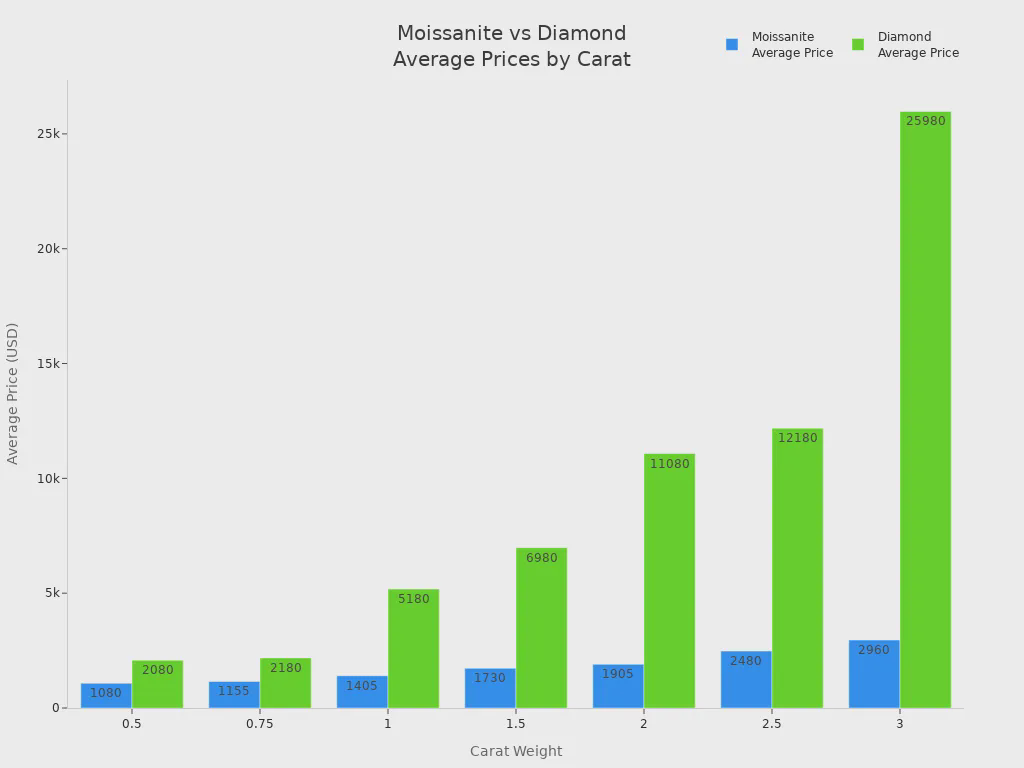
You can use the extra money for things like a wedding or trip. Many young people now choose moissanite because it is pretty and a good deal.
Durability
Moissanite is very strong and lasts a long time. You can wear it every day and not worry. It is almost as hard as diamond, with a 9.25 on the Mohs scale. This means it does not scratch from dust or steel. Its crystal shape also keeps it from breaking or chipping easily.
Property | Moissanite | Diamond | Sapphire/Ruby |
|---|---|---|---|
Mohs Hardness | 9.25 (very hard) | 10 (hardest) | 9 (hard) |
Toughness | Superior, less chipping | Can fracture | Less tough |
Heat Resistance | Very high | High | Lower |
Moissanite keeps its shine and shape for many years. You can trust it for rings, earrings, and jewelry you wear a lot.
Moissanite vs Diamonds
Appearance
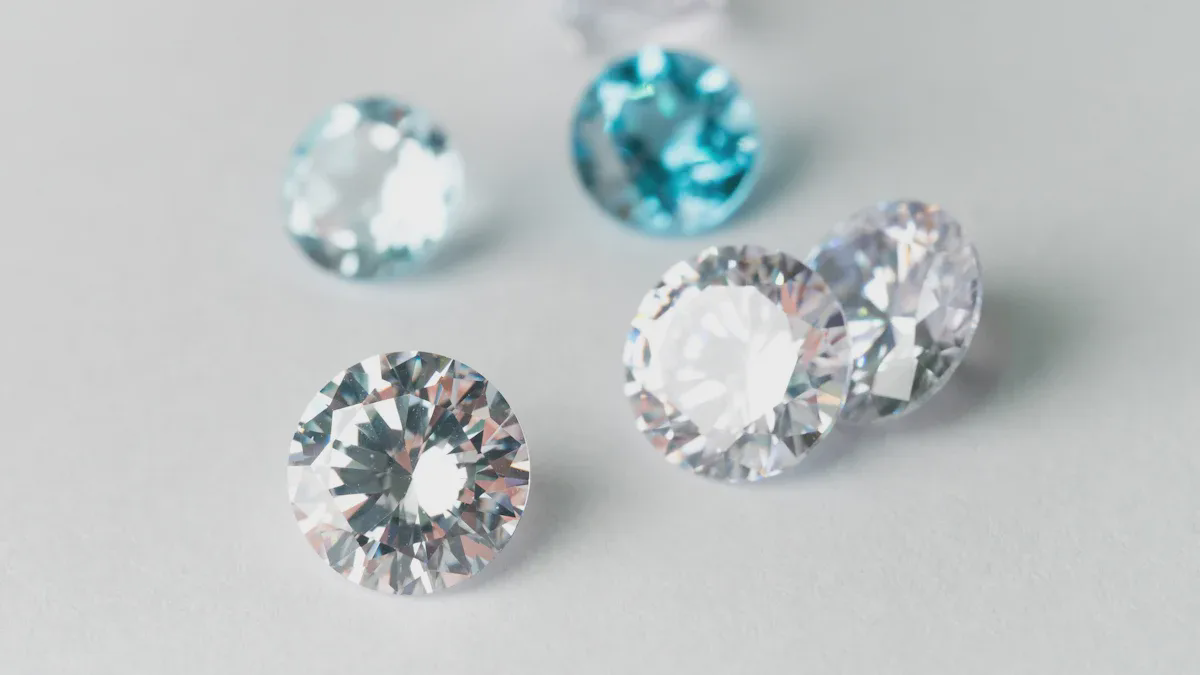
You can see differences between moissanite and diamonds if you look closely. Moissanite shines with more fire and shows rainbow flashes. Some people call this a "disco-ball" effect. This happens because moissanite bends light more than diamonds do. Diamonds have a white sparkle that looks crisp. Moissanite sparkles with more colors and can look a bit fuzzy. If you use a magnifier, you might see doubled lines on the sides of moissanite. This is called double refraction. Diamonds do not have double lines, so their sides look sharp and single.
Moissanite can look a little yellow or green, especially in bigger stones. Diamonds, especially those graded D to I, look icy white in all lights. Moissanite sometimes changes color in different lights, showing yellow or green. Diamonds keep the same color all the time.
Visual Characteristic | Moissanite | Diamond |
|---|---|---|
Double Refraction | Yes | No |
Fire (Rainbow Sparkle) | High | Moderate |
Color Hue | May show yellow/green | Usually colorless |
🧐 Tip: If you want a stone with lots of colorful sparkle, moissanite is a good choice. If you like a classic, icy look, diamonds may be better for you.
Cost
You save a lot of money when you pick moissanite instead of diamonds. Moissanite costs much less, even if the stones look the same size and are very clear. For example, a 1-carat moissanite with top clarity can cost $500–$600. A diamond of the same size and quality can cost $4,000–$10,000. The price difference gets bigger with larger stones. Moissanite often costs only 20% to 50% of what a diamond costs.
Carat Size | Moissanite Price Range | Diamond Price Range |
|---|---|---|
1 Carat | $500 - $600 | $4,000 - $10,000 |
2 Carats | $900 - $1,200 | $6,000 - $11,000+ |
3 Carats | $1,600 - $2,000 | $7,000 - $26,000+ |
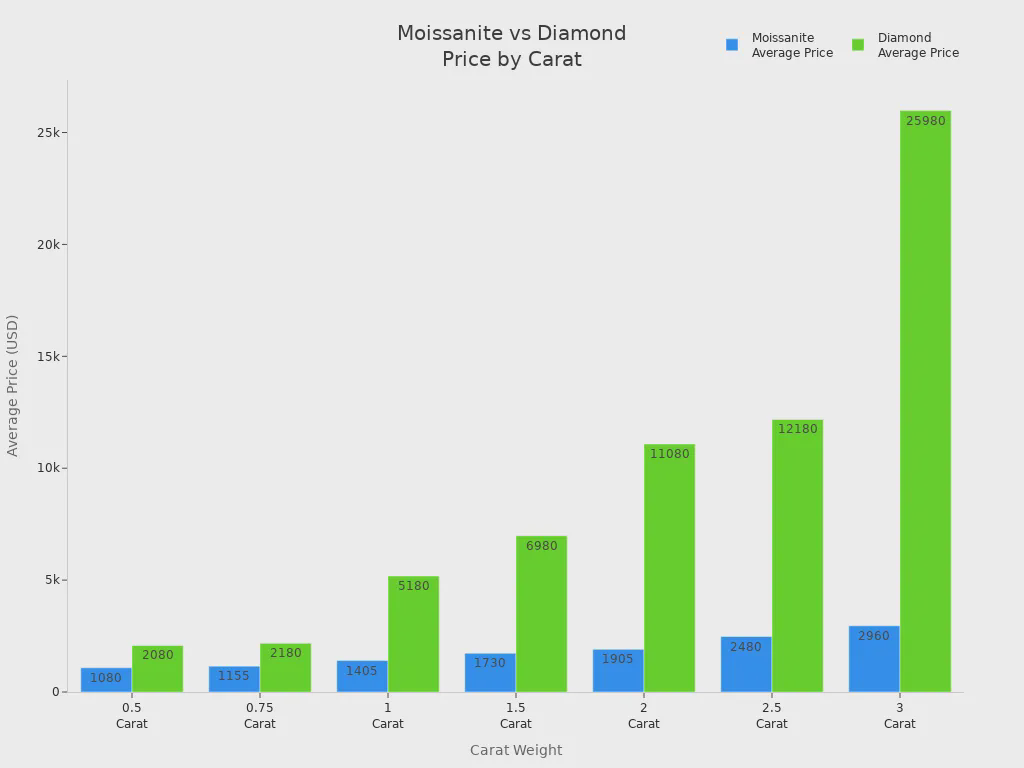
💡 Note: Moissanite lets you get a bigger or better stone for less money. Many people choose moissanite for this reason.
Sustainability
You help the planet when you choose moissanite. Labs make moissanite, so there is no mining. This means less harm to land, water, and animals. Making moissanite uses less energy and makes less pollution than mining diamonds. Diamond mining can hurt forests and dirty water. It can also cause unfair jobs for workers. Moissanite does not have these problems. You get a pretty stone and help make the world cleaner and fairer.
🌱 Tip: If you care about the environment and want to make good choices, moissanite is a smart and kind option.
When you find out how is moissanite created, it makes sense why it is special. Labs use new technology to grow crystals. This makes less waste and uses less energy than mining. You do not have to worry about the problems that come with mined gems. Moissanite gives you a pretty, strong, and affordable stone. Many people pick it because it is good for the planet and does not cause fights. If you want a gemstone that is modern and responsible, moissanite is a great pick.
FAQ
How can you tell if a moissanite is lab-created?
You can check with a jeweler or use a gemstone tester. Almost all moissanite on the market comes from labs. Natural moissanite is extremely rare. Lab stones look clear and have few flaws.
Does moissanite require special care?
You can clean moissanite with warm water, mild soap, and a soft brush. Moissanite resists scratches and heat. You do not need special cleaners. Avoid harsh chemicals to keep your stone looking bright.
Can you customize the shape and size of lab-grown moissanite?
Yes! You can choose many shapes and sizes for your moissanite. Labs can grow crystals for round, oval, cushion, or other cuts. You can pick the size that fits your jewelry design.
How does moissanite differ from diamond in daily wear?
Moissanite shines with more rainbow colors than diamond. It resists scratches almost as well as diamond. You can wear moissanite every day. It stays bright and strong for years.