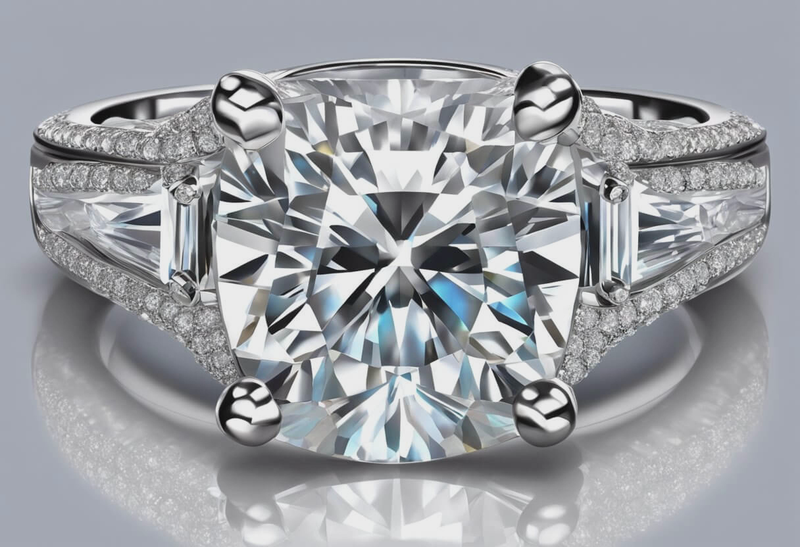
Moissanite is a gemstone that started as a rare natural mineral, first discovered in a meteor crater by scientist Henri Moissan. However, nearly all moissanite available today is lab-created because natural moissanite is extremely rare and expensive to mine.
Chemically, moissanite is made of silicon carbide, which gives it unique physical traits. It’s nearly as hard as a diamond, rating about 9.25 on the Mohs scale, and it has a higher refractive index. This means moissanite can sparkle even more than diamonds, with extra flashes of rainbow-like fire.
Because of its durability, brilliance, and affordability, moissanite has quickly become a popular alternative to diamonds, especially for engagement rings and fine jewelry. It offers great visual appeal without the high price tag, making it a smart and ethical choice for many shoppers in the US market.
Visual and Physical Differences Brilliance and Fire Sparkle Comparison
When comparing moissanite vs diamond, one of the most noticeable differences is their sparkle. This comes down to two key factors: refractive index and dispersion.
- Refractive Index measures how much light bends inside the stone. Diamonds have a refractive index of about 2.42, while moissanite is higher at around 2.65. This means moissanite bends light more, which influences its sparkle.
- Dispersion refers to how much the stone splits light into its spectral colors, causing “fire.” Moissanite’s dispersion is 0.104, significantly higher than a diamond’s 0.044.
How This Affects Sparkle
| Feature | Diamond | Moissanite |
|---|---|---|
| Refractive Index | 2.42 | 2.65 |
| Dispersion | 0.044 (less fire) | 0.104 (more fire/color flashes) |
| Sparkle Type | Bright brilliance, more white light flashes | Strong fire with colorful flashes |
Because of these values, moissanite has more colorful flashes (fire) than diamonds, which tend to show a cleaner, white brilliance. Some people find moissanite’s sparkle dazzling but slightly “rainbow-like,” while diamonds tend to have a more subtle, classic shine.
Understanding this difference helps when deciding if you prefer the vivid fire of moissanite or the traditional brilliance of a diamond.
Visual and Physical Differences Color Comparison
When comparing color between diamond and moissanite, it’s important to know each stone’s typical range and how lighting affects what you see.
Diamonds
- Color ranges from colorless (D) to light yellow or brown (Z)
- Most valuable diamonds are colorless or near-colorless (D-F)
- Under natural light, diamonds show minimal color tint, making them look bright white
Moissanite
- Usually near colorless but can have slight yellow or greenish hues
- In bright or fluorescent light, moissanite may reflect subtle rainbow colors
- Under incandescent light, moissanite’s color tint can be more noticeable
| Feature | Diamond | Moissanite |
|---|---|---|
| Typical Color | D (colorless) to Z (light tint) | Near colorless with slight tints |
| Color Appearance | Mostly bright white | May show faint yellow/green hues |
| Lighting Impact | Stays stable under various lights | Shows more color shift, especially in warm lights |
Lighting changes how these stones look, so what seems colorless indoors might reveal tints outdoors. This is why moissanite sometimes shows more noticeable color changes compared to diamonds when viewed in different lighting conditions.
Hardness and Durability
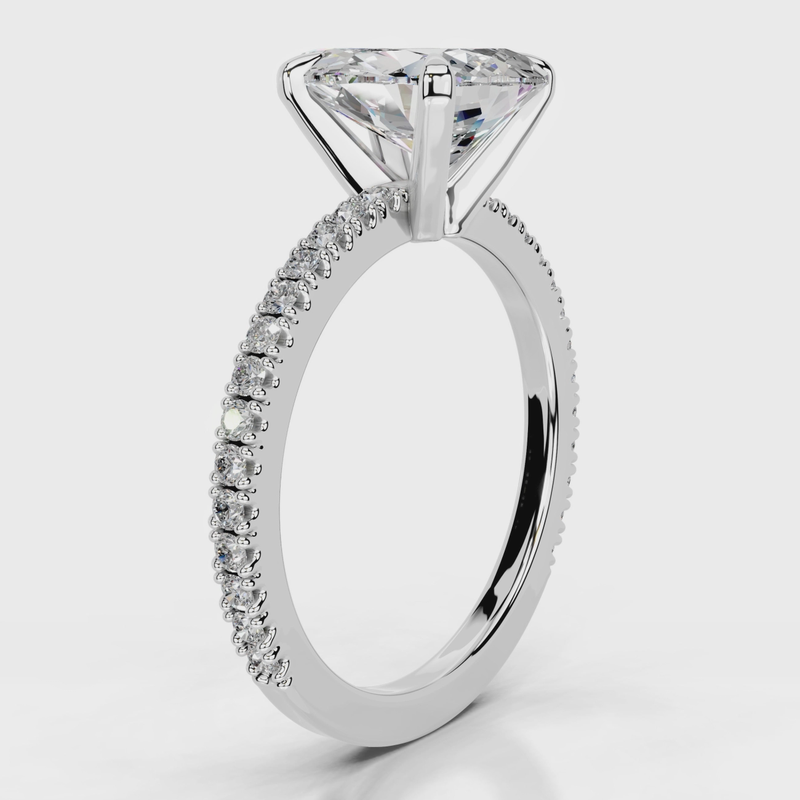
When comparing moissanite vs diamond, hardness and durability are key factors to consider for everyday wear.
Here’s how they stack up on the Mohs scale:
| Gemstone | Mohs Hardness Rating | What It Means for Durability |
|---|---|---|
| Diamond | 10 | The hardest natural material, highly resistant to scratches and damage. |
| Moissanite | 9.25 | Very hard and durable, but slightly less scratch-resistant than diamond. |
In real-world wear:
- Diamond handles rough daily wear with minimal signs of wear because it scores a perfect 10.
- Moissanite is tough enough for most jewelry uses but may develop tiny surface scratches over many years, especially if exposed to abrasive materials.
Both stones are excellent for rings and everyday pieces, but diamonds hold up better under extreme conditions. If you want a stone that’s almost as hard but comes at a lower price, moissanite is a solid choice without sacrificing much on durability.
Knowing this helps you decide which gemstone fits your lifestyle best.
Visual and Physical Differences Cut and Clarity Differences
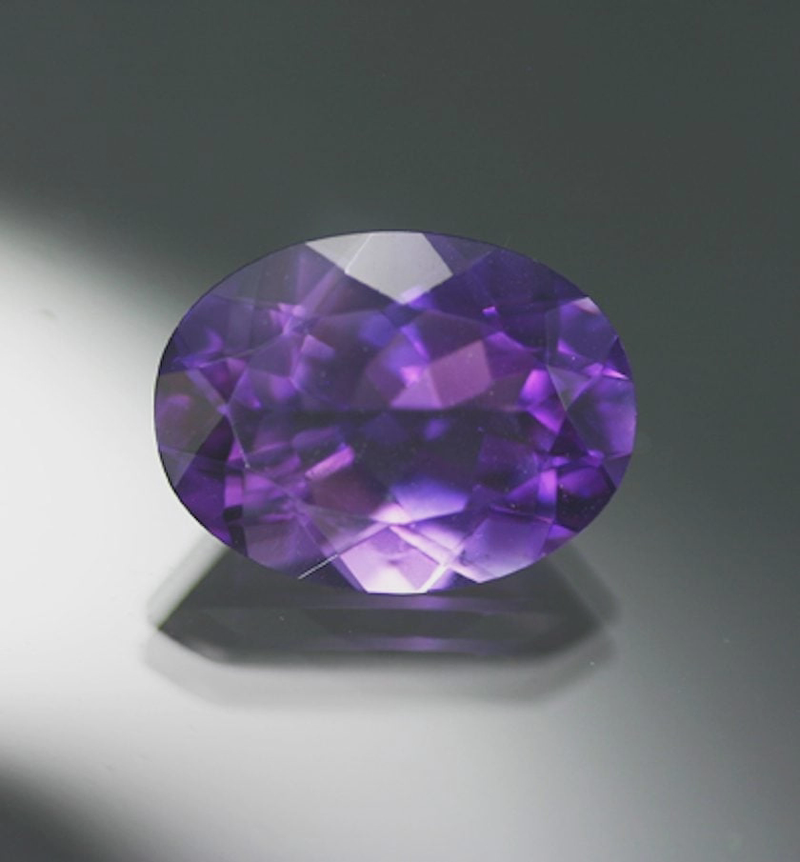
When it comes to cut styles, diamonds often feature classic shapes like round brilliant, princess, and cushion cuts, designed to maximize their natural sparkle and brilliance. Moissanite, while also available in these popular cuts, sometimes has slightly different proportions to enhance its unique fire and brilliance.
In terms of clarity, diamonds usually have natural inclusions like tiny crystals or feathers. These inclusions vary widely depending on the diamond’s grade and origin. Moissanite, especially lab-created ones, tend to have fewer inclusions and often look cleaner to the naked eye. However, moissanite can display needle-like inclusions or small reflective growth lines unique to its crystal structure.
| Feature | Diamond | Moissanite |
|---|---|---|
| Typical Cut Styles | Round brilliant, princess, cushion | Similar cuts but sometimes optimized for fire |
| Common Inclusions | Crystal spots, feathers, clouds | Needle-like inclusions, reflective growth lines |
| Clarity Appearance | Can vary from flawless to included | Usually eye-clean, fewer inclusions |
Overall, diamonds can show more variety in inclusions and cuts due to their natural formation, while moissanite’s lab origin offers consistent clarity and slightly adjusted cuts to highlight its sparkle differently.
Practical Ways to Tell the Difference Using a Loupe or Microscope
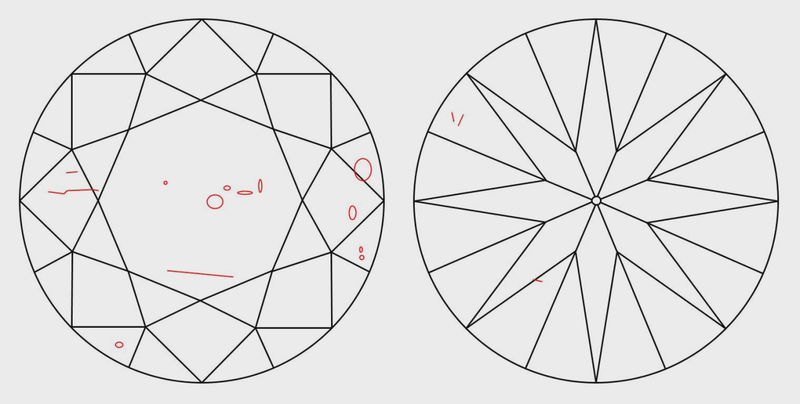
One quick way to spot whether a stone is moissanite or diamond is by examining it under a loupe or microscope. Both gems have unique internal features, called inclusions or defects, that help experts tell them apart.
What to Look For
| Feature | Diamond | Moissanite |
|---|---|---|
| Inclusions | Natural diamonds often have tiny minerals, feathers, or pinpoint inclusions | Usually cleaner with fewer inclusions, often appearing as metallic or needle-like features |
| Facet Edges | Sharp, well-defined | Slightly rounded or softer edges |
| Double Refraction | None – diamonds have single refraction | Moissanite shows double refraction, meaning you might see doubled lines or facets through a loupe |
| Surface Blemishes | May show scratches or etchings | Often has very few surface blemishes due to lab creation |
How It Helps
- Double Refraction is a key giveaway: moissanite causes a doubling effect inside the stone that you won’t see in diamonds.
- Inclusions types differ; diamonds usually have organic inclusions, while moissanite’s are more synthetic-looking.
- You can spot these clues with a 10x loupe used by jewelers or a simple microscope.
Using a loupe or microscope won’t always be foolproof unless you know what to look for, but it’s a reliable first step in identifying moissanite vs diamond without expensive tools.
Practical Ways to Tell the Difference
Conducting a Thermal Conductivity Test
One common way to tell a diamond from moissanite is using a thermal conductivity test. Diamond testers measure how well heat moves through the stone. Diamonds are excellent heat conductors, so when you touch the tester to a diamond, it quickly shows a positive result.
Why Moissanite Can Cause False Positives
Moissanite also conducts heat well but not exactly like a diamond. Most standard diamond testers can mistake moissanite for a diamond because they don’t distinguish the subtle difference in heat flow. This means moissanite often triggers a “diamond” reading, making it tricky to rely on this test alone.
| Test Aspect | Diamond | Moissanite |
|---|---|---|
| Thermal Conductivity | High – clearly detected | High – can mimic diamond |
| Tester Result | Accurate diamond reading | May cause false positive |
| Need for Additional Tests | Usually no | Yes, to confirm accurately |
Practical Ways to Tell the Difference
Using a Moissanite Tester Electric Conductivity Test
When it comes to accurately telling moissanite from diamond, a specialized moissanite tester is one of the best tools out there. Unlike traditional diamond testers, which rely on thermal conductivity, moissanite testers measure electrical conductivity to differentiate between the two gems.
How it works:
- Moissanite: Conducts electricity, so the tester detects a signal.
- Diamond: Does not conduct electricity, so no signal is detected.
This makes these testers more reliable since moissanite can sometimes pass as diamond on thermal conductivity tests, creating false positives.
| Feature | Diamond | Moissanite | Moissanite Tester Result |
|---|---|---|---|
| Thermal Conductivity | High | High | Can give false positives |
| Electrical Conductivity | None | Moderate to high | Accurate detection with tester |
| Tester Type | Traditional diamond tester | Moissanite-specific tester | Detects electric current in moissanite |
Practical Ways to Tell the Difference Fog Test and Other At Home Methods
When trying to spot the difference between moissanite and diamond at home, the fog test is a popular go-to. Here’s how it works: you breathe on the stone and watch how quickly the fog clears. Diamonds disperse heat fast, so the fog should disappear almost immediately. Moissanite takes a bit longer to clear, but the difference can be subtle.
Here’s a quick look at common at-home tests and their reliability:
| Test Method | How It Works | Reliability | Notes |
|---|---|---|---|
| Fog Test | Breath on stone to see fog speed | Low to Medium | Quick but easy to misread |
| Visual Sparkle | Check fire and brilliance | Medium | Moissanite shows more colorful fire |
| Transparency Test | See if you can read text through stone | Low | Not precise, depends on cut |
Limitations to keep in mind:
- These tests are not foolproof and can give false positives.
- Lighting conditions and cut quality affect results.
- Moissanite’s sparkle can look very close to diamond’s under casual observation.
- At-home methods cannot replace professional tools like thermal or electric conductivity testers.
Price and Value Considerations
When it comes to price, moissanite is significantly more affordable than diamonds. On average, moissanite costs about 10-20% of a comparable diamond’s price. This makes it an attractive option for buyers looking for a stunning gemstone without the steep cost.
Several factors influence pricing for both stones:
- Diamonds: Price depends on the 4 Cs—carat, cut, color, and clarity. Natural diamonds are rarer and mined, which adds to their cost. Brand reputation and certification by organizations like GIA also impact price.
- Moissanite: Pricing varies mostly by size and cut quality. Because many moissanites are lab-created, production costs are lower, keeping prices down. The rise in popularity and brand marketing can affect price slightly.
Regarding value retention and resale:
- Diamonds: Tend to hold value better over time, especially high-quality stones. They have a solid resale market, though lump-sum returns may be below retail prices.
- Moissanite: Generally does not retain resale value well. It is primarily bought for personal enjoyment rather than investment.
Overall, moissanite offers a budget-friendly alternative that looks great upfront, while diamonds remain the go-to for those focused on long-term value and tradition.
Common Myths and Misconceptions about Moissanite and Diamond
There’s a lot of confusion when it comes to moissanite vs diamond, so let’s clear up some common myths.
Myth 1: Moissanite is as hard as a diamond
While moissanite is pretty tough, it’s not as hard as a diamond. Diamonds rate a 10 on the Mohs scale, the highest, while moissanite sits around 9.25. That means diamonds are more resistant to scratches and everyday wear.
Myth 2: Moissanite looks fake because of its sparkle
Moissanite actually has more “fire” (rainbow flashes) than a diamond, which sometimes makes it look different in lighting. It’s not fake, just a distinct sparkle style. Diamonds tend to have a softer, more subtle brilliance.
Myth 3: Moissanite can always pass for diamond
Moissanite can look very close to diamonds, especially to the untrained eye. However, experts or specialized testers often catch the difference. So, while it’s great for jewelry and offers a diamond-like look, it’s not a perfect diamond copy.
Myth 4: Diamonds always hold their value better
Diamonds generally keep better resale value, but that’s also shaped by market demand and certification. Moissanite is affordable upfront but doesn’t really have a resale market.
Understanding these points helps you make a smarter choice, whether you value durability, sparkle, or long-term investment.
Which One Should You Choose
Choosing between moissanite and diamond depends on a few key factors. Here’s what to consider:
Budget
- Moissanite is much more affordable, often costing a fraction of a diamond’s price.
- Diamonds come with a higher price tag but often hold value better over time.
Appearance and Sparkle Preferences
- Diamonds have that classic brilliance and subtle sparkle many people love.
- Moissanite shines brighter and shows more “fire” (rainbow flashes), which some prefer, but it looks slightly different than diamond under certain lighting.
Purpose of Jewelry
- For engagement rings or heirlooms, many go with diamonds for tradition and long-term value.
- For everyday wear or fashion pieces, moissanite offers durability and sparkle at a better price.
Ethical and Environmental Concerns
- Moissanite is mostly lab-created, making it a more eco-friendly and conflict-free choice.
- Diamonds can be natural or lab-made, but natural diamonds sometimes raise questions about mining ethics.
Brand Reputation and Sourcing Transparency
- When buying diamonds or moissanite, check for certifications like GIA or IGI.
- Choose sellers who are open about where their stones come from and their quality standards.
| Factor | Moissanite | Diamond |
|---|---|---|
| Price | Much more affordable | Higher cost |
| Sparkle | More fire, brighter | Classic brilliance |
| Durability | Very durable (9.25 on Mohs scale) | Hardest mineral (10 on Mohs) |
| Ethical impact | Lab-created, eco-friendly | Natural mining has concerns unless lab-grown |
| Resale Value | Lower resale value | Generally better resale value |
| Certification Importance | IGI and others available | GIA is the gold standard |
Consider your priorities—whether it’s budget, style, or ethics—to decide which gem fits your needs best.